Alaska-Yukon Moose
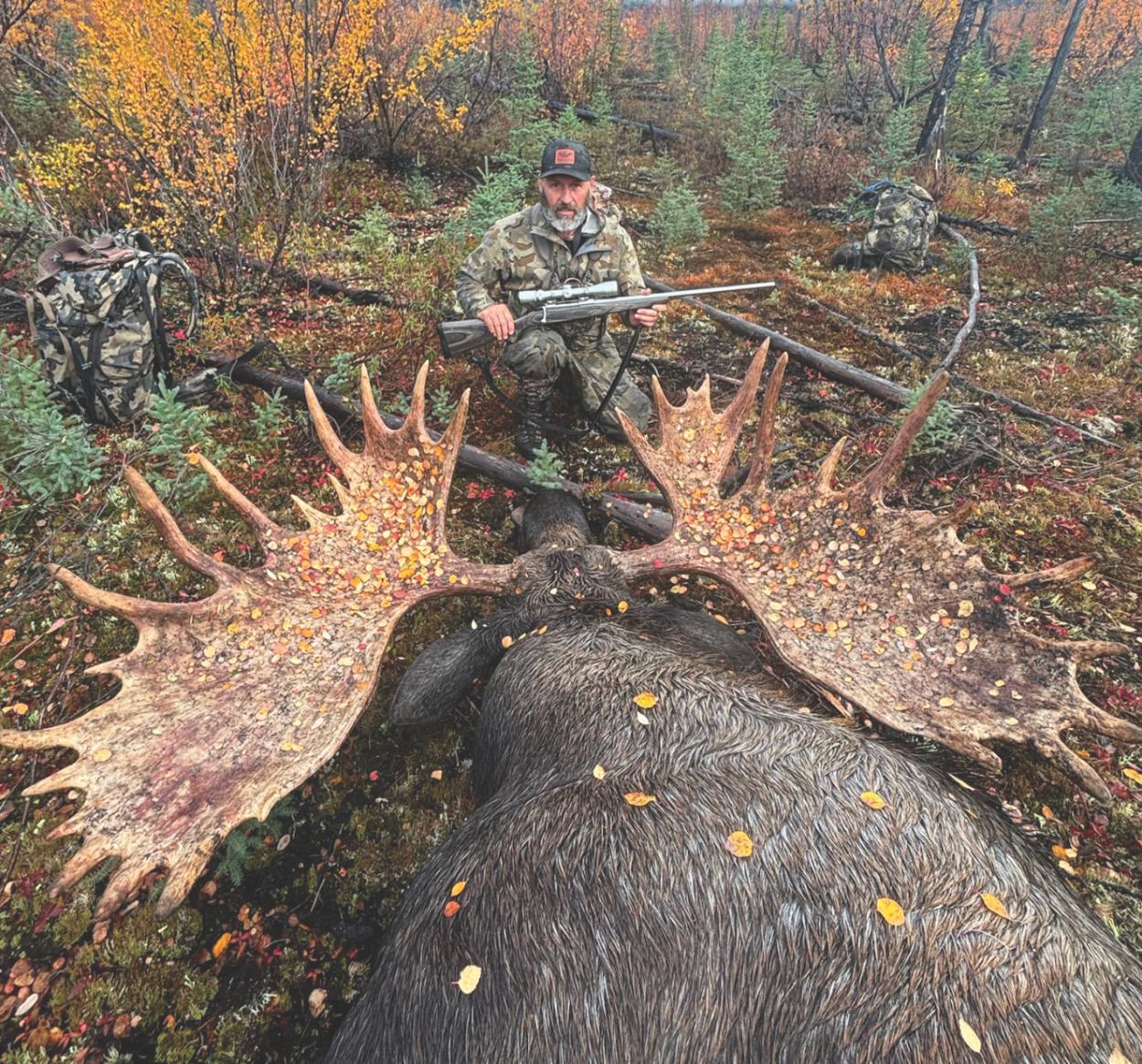
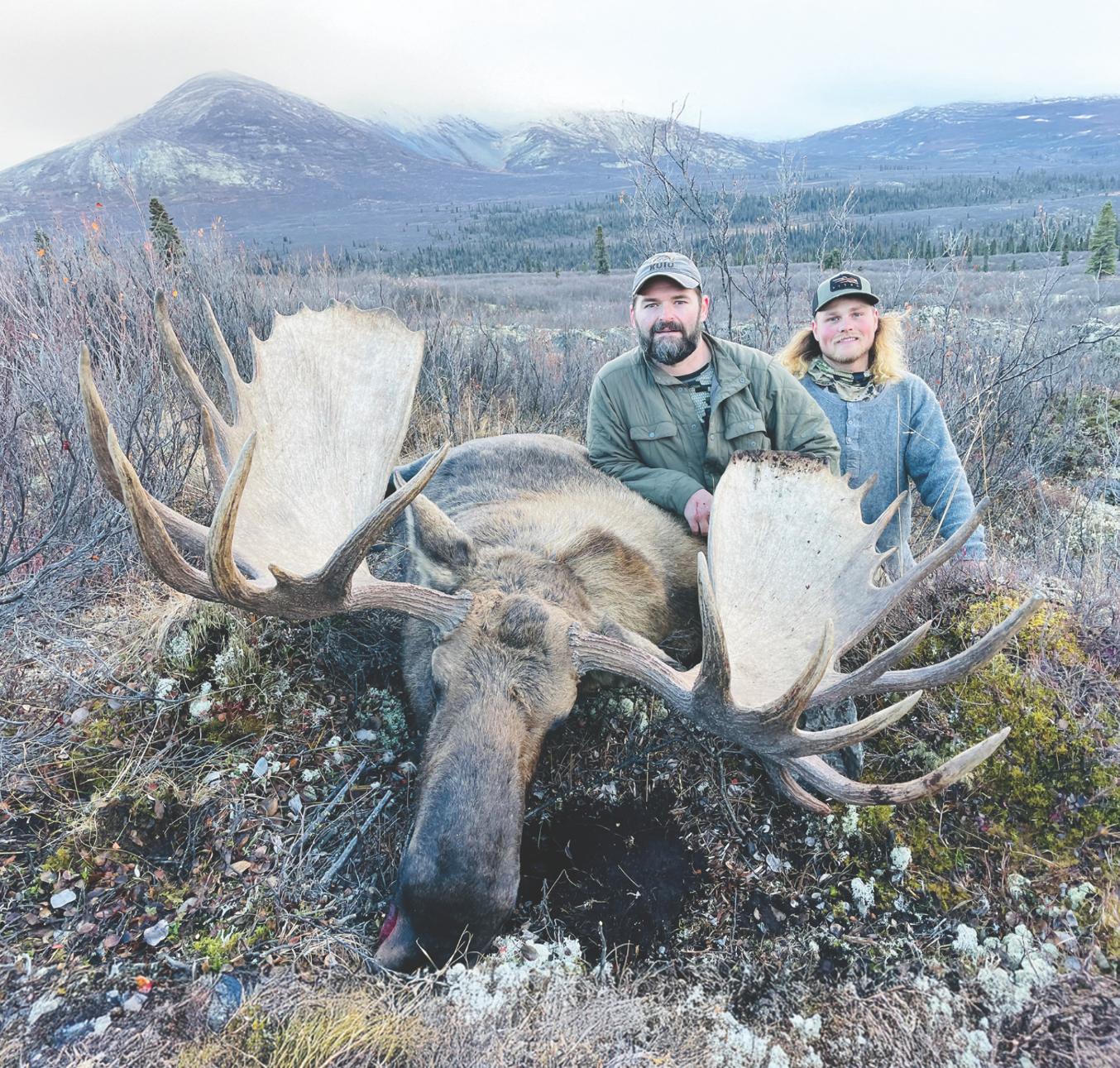
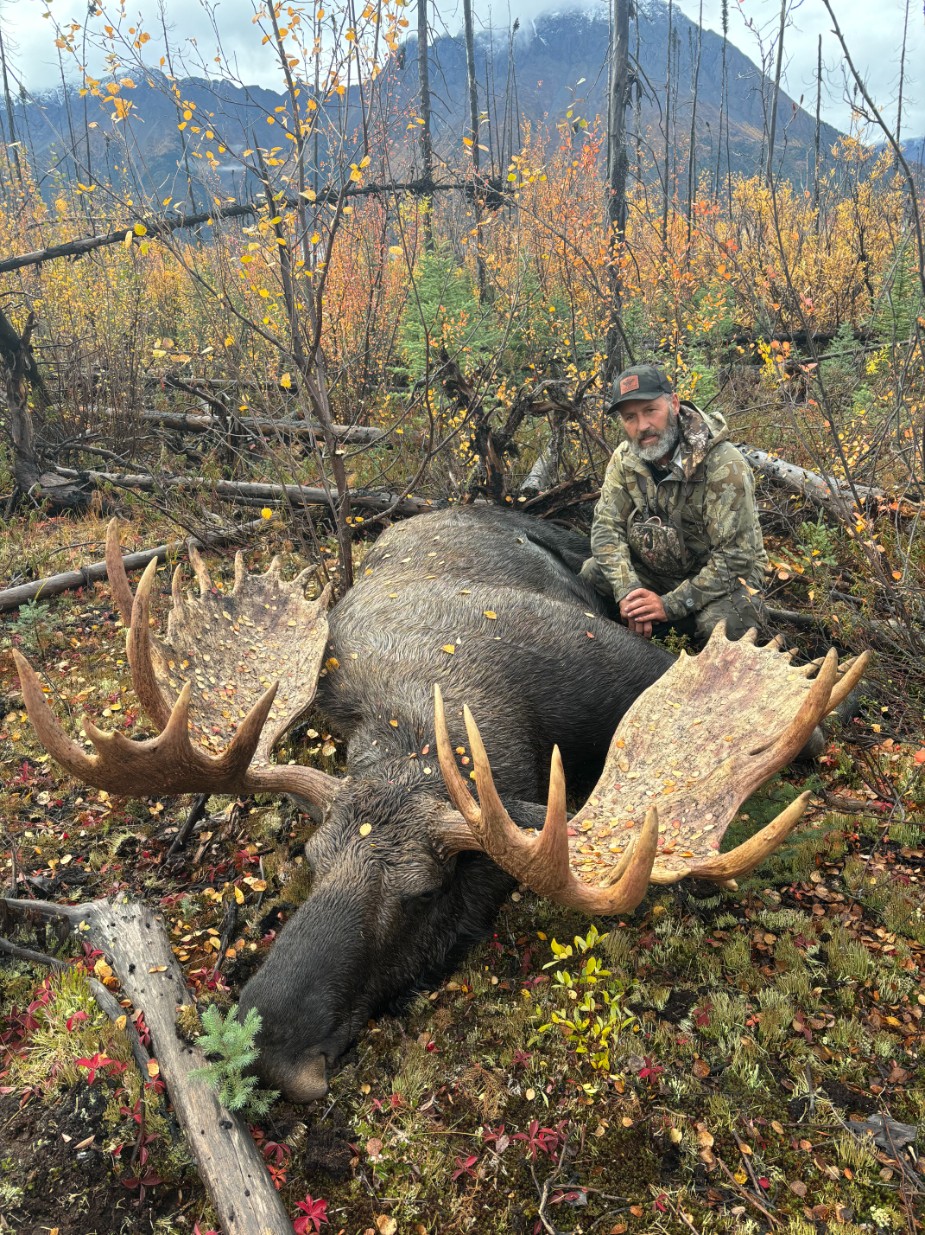
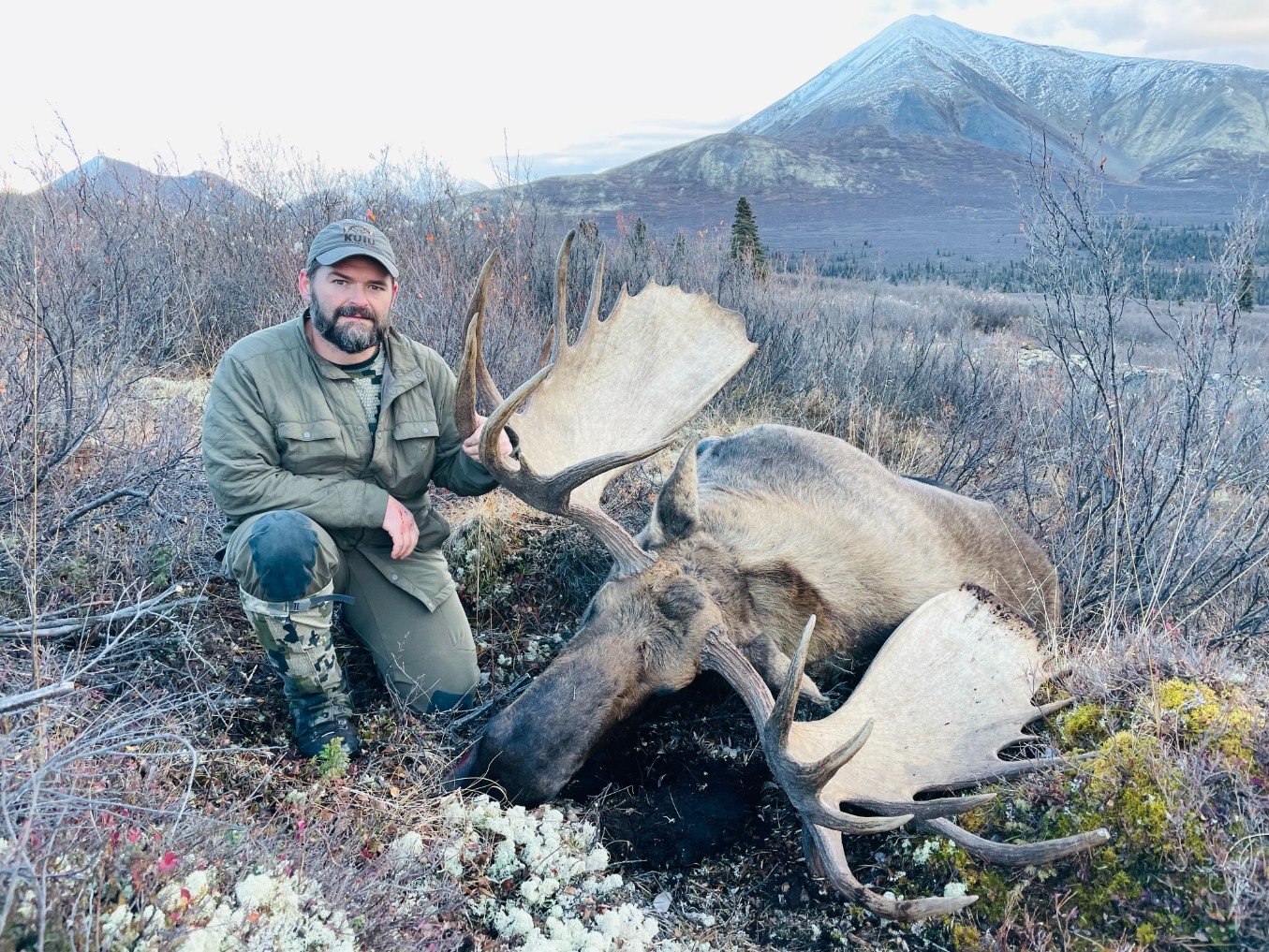
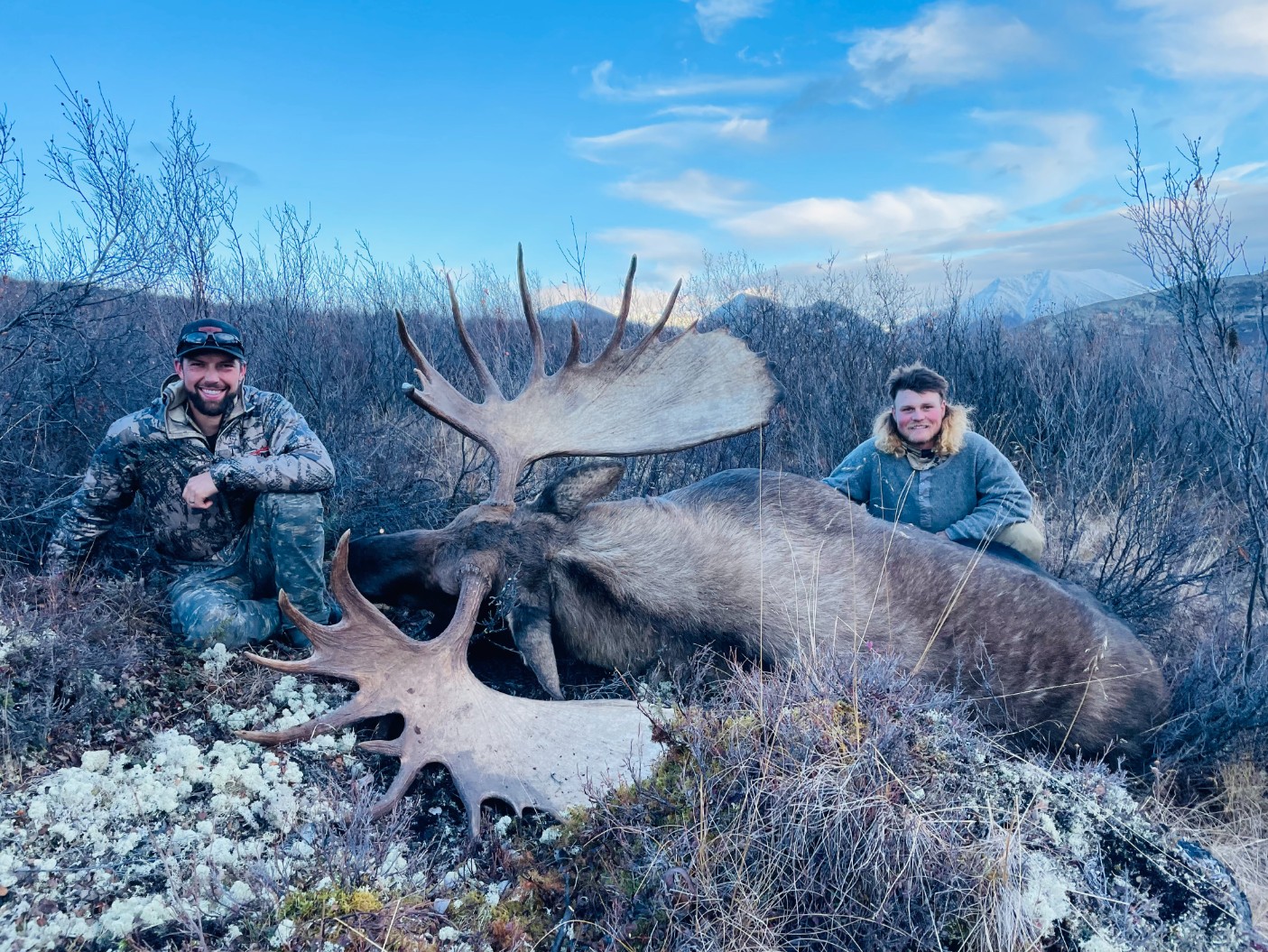
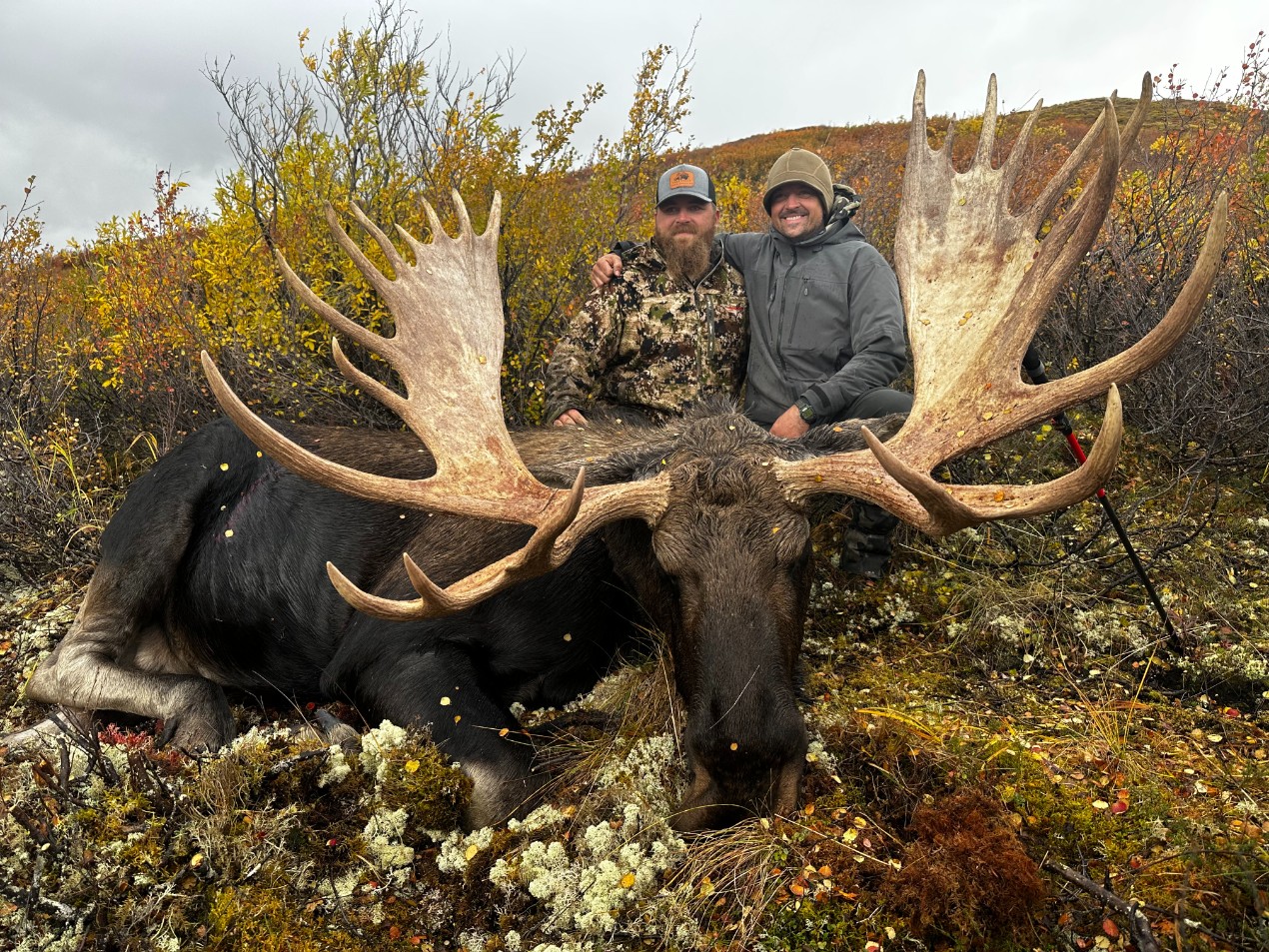
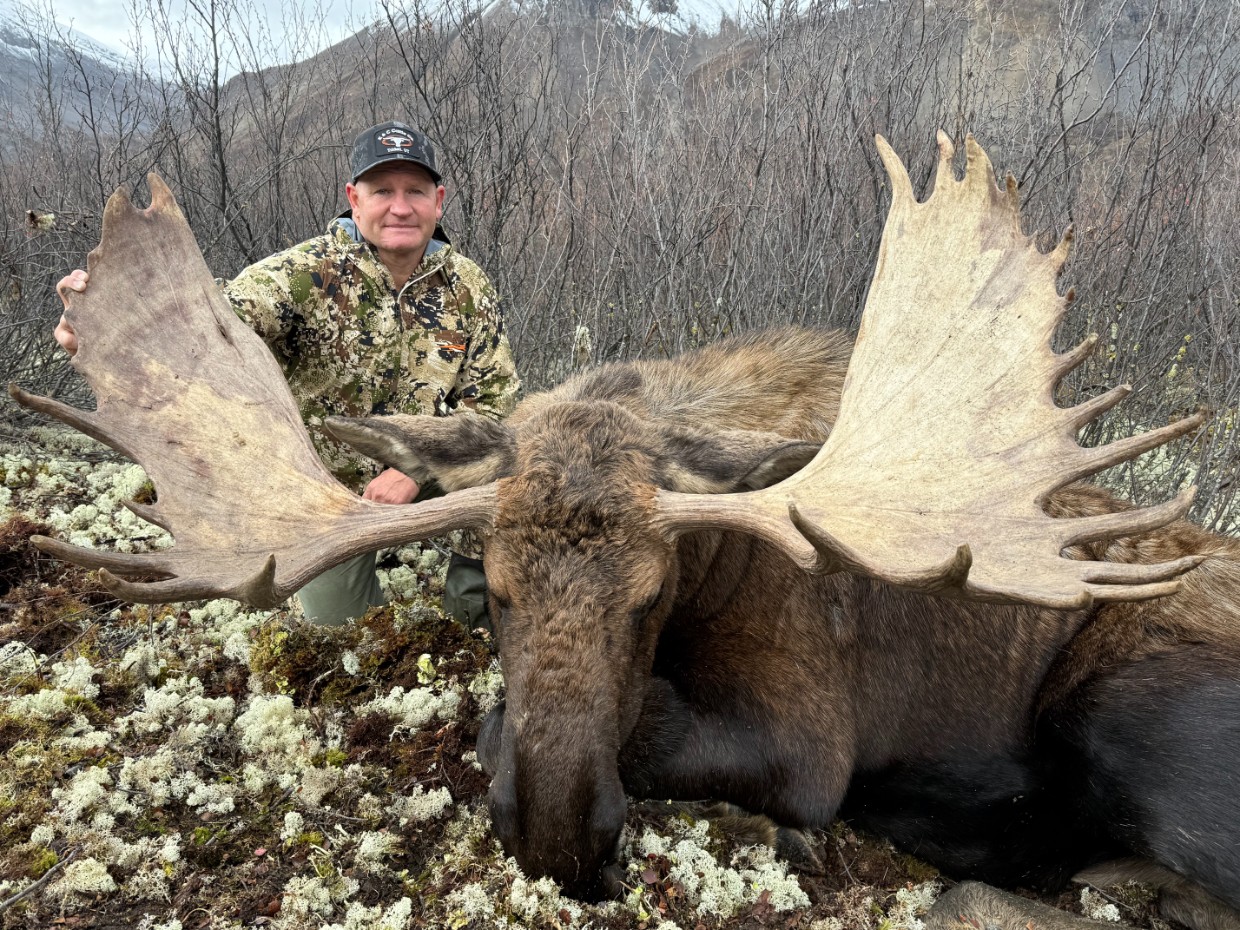
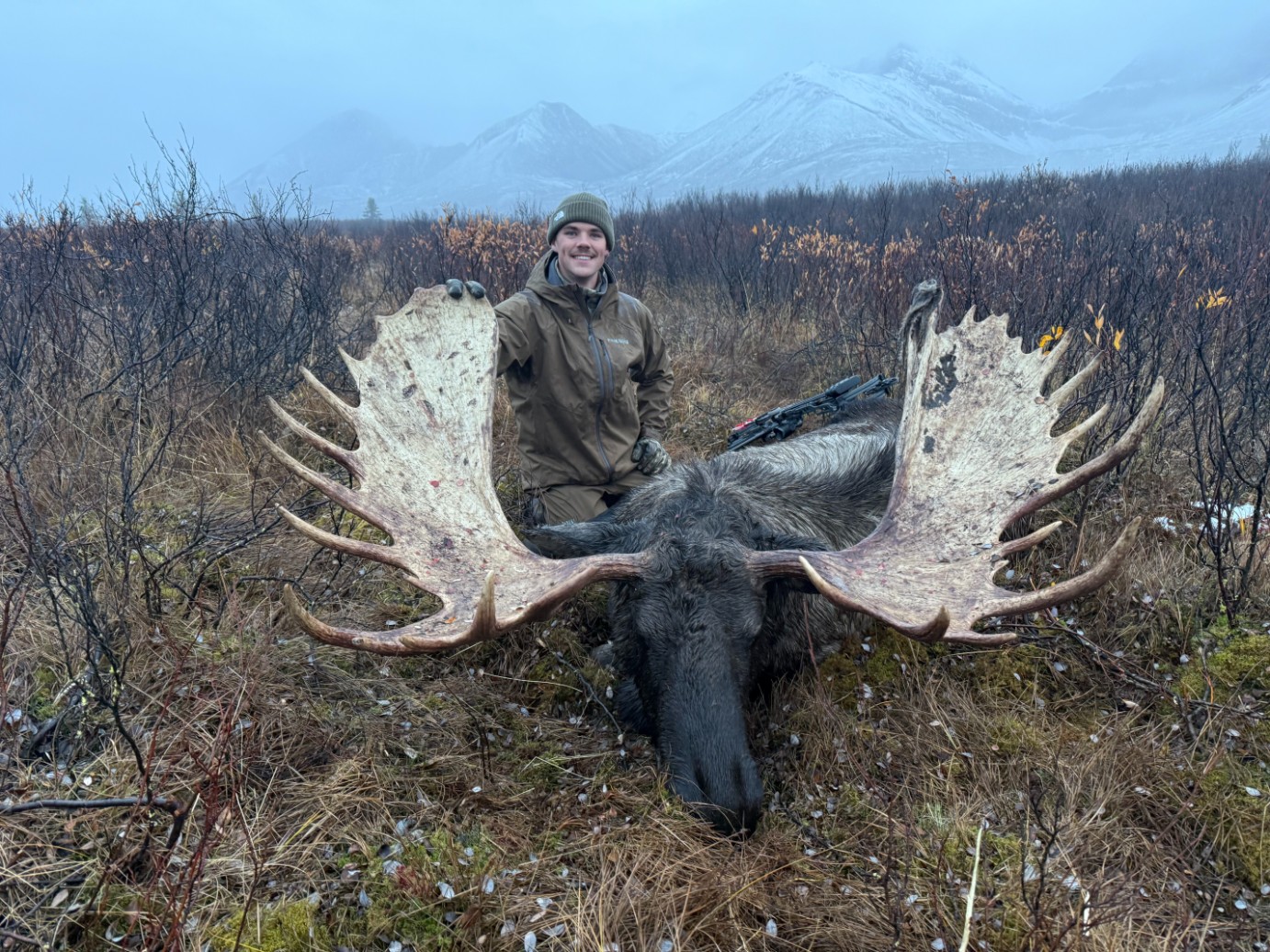
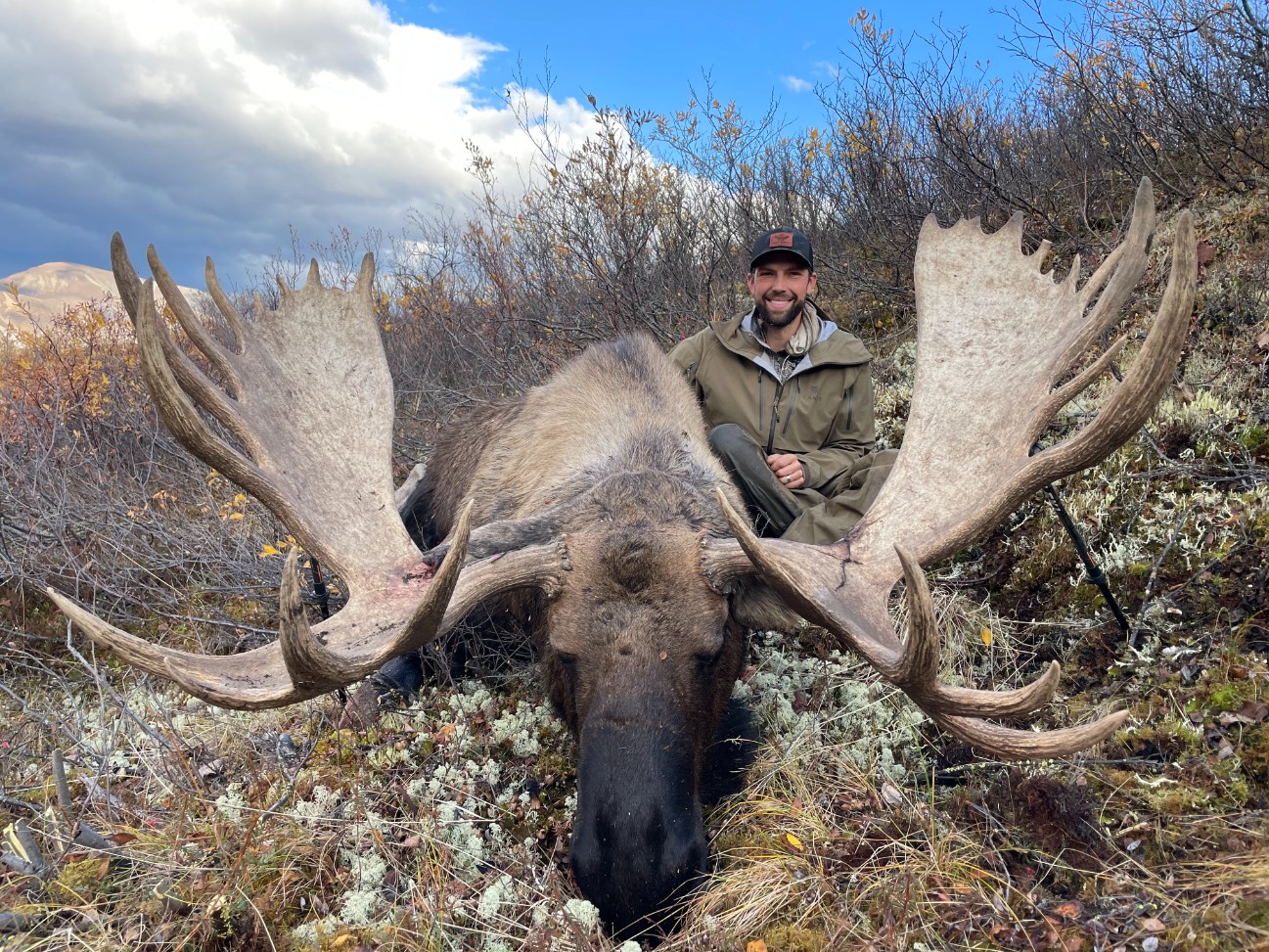
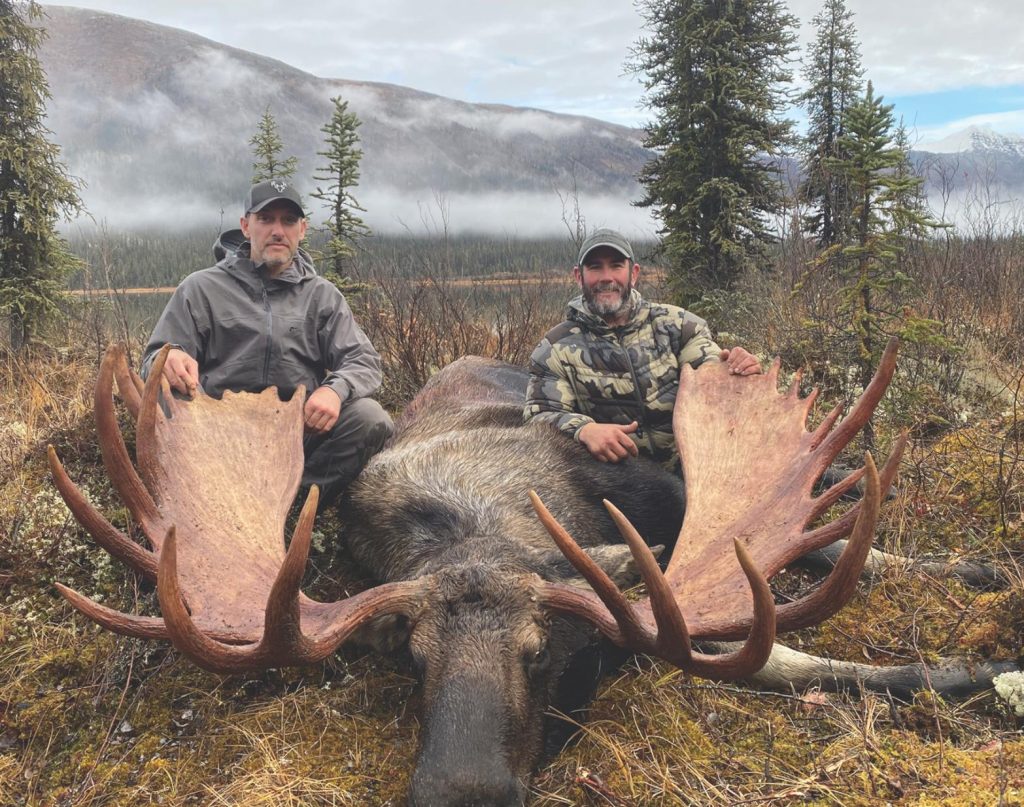
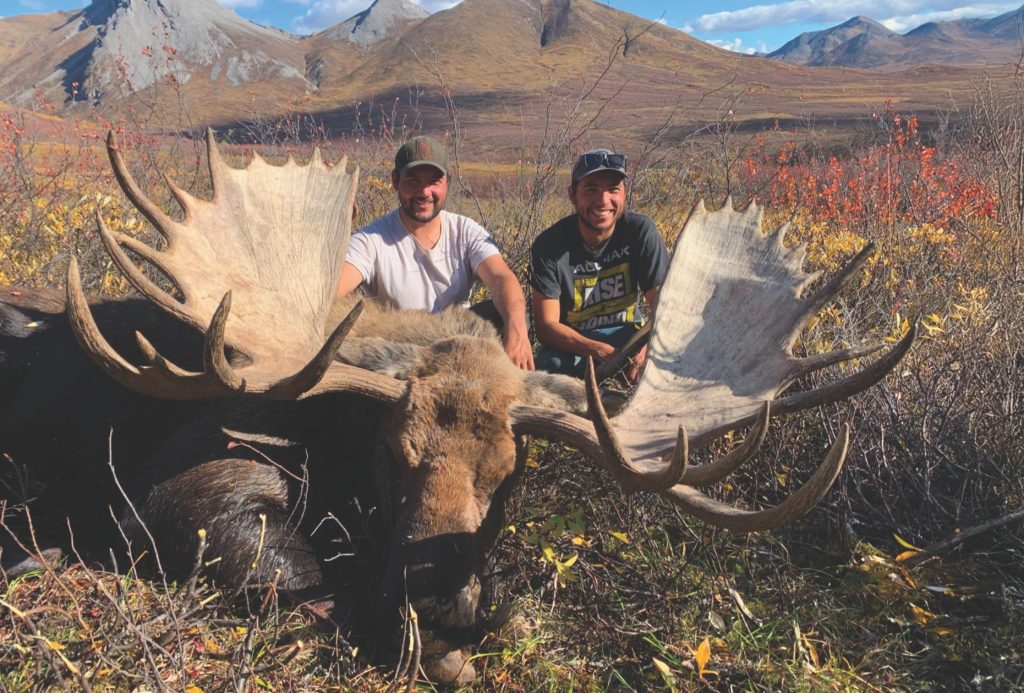
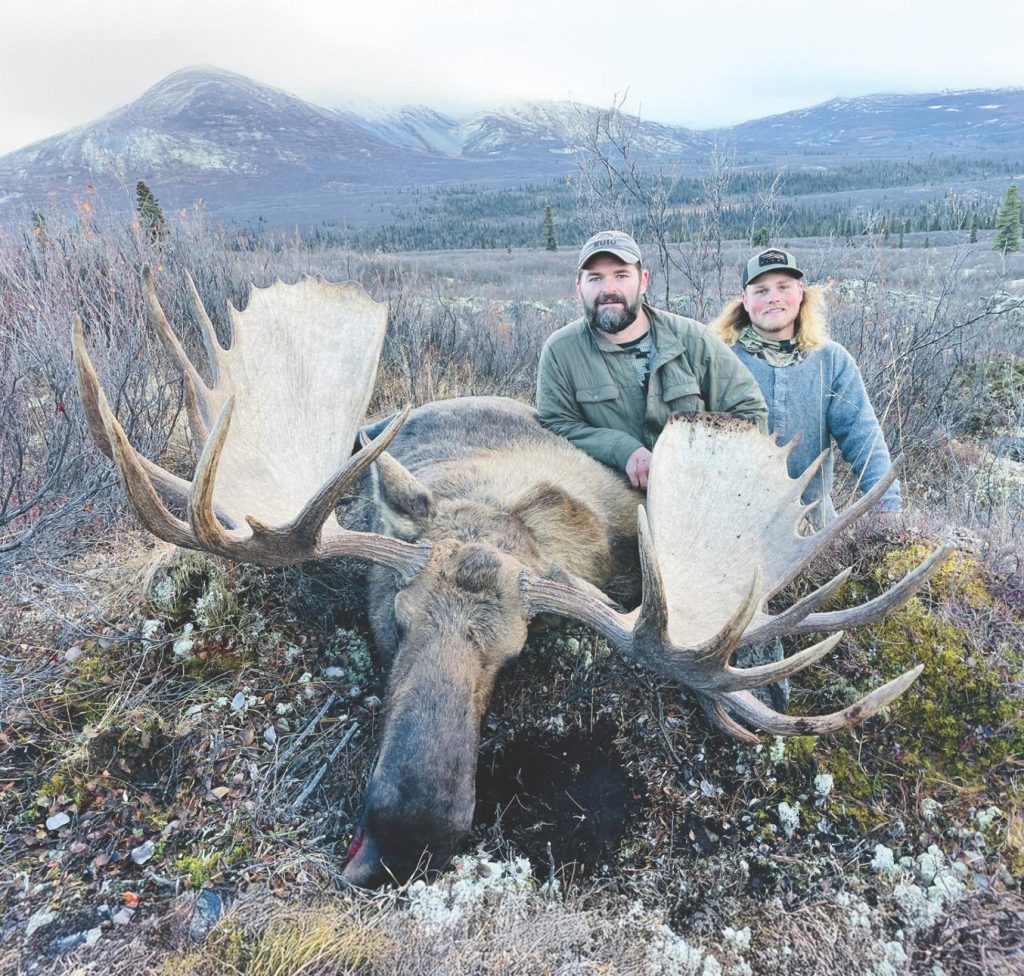
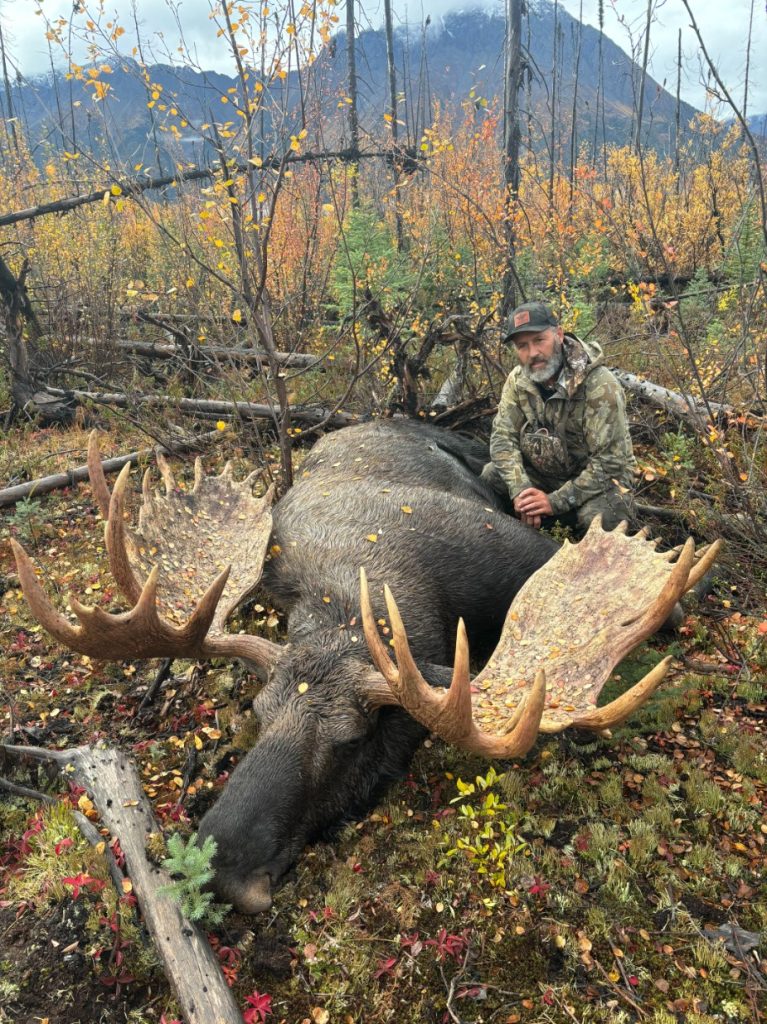
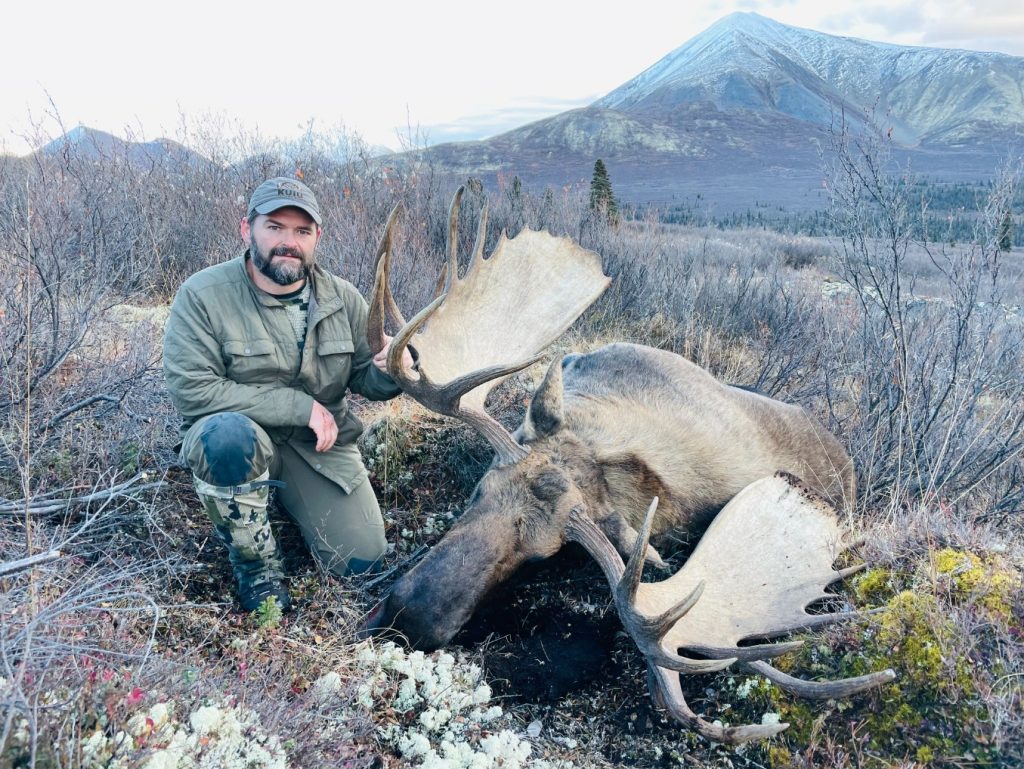
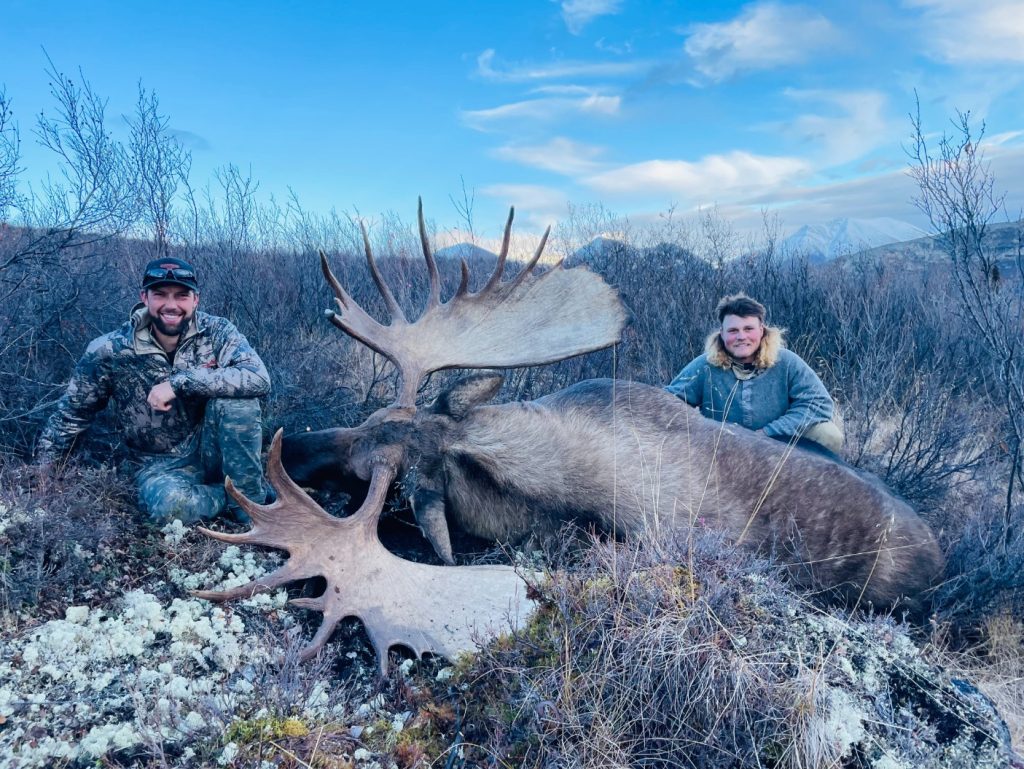
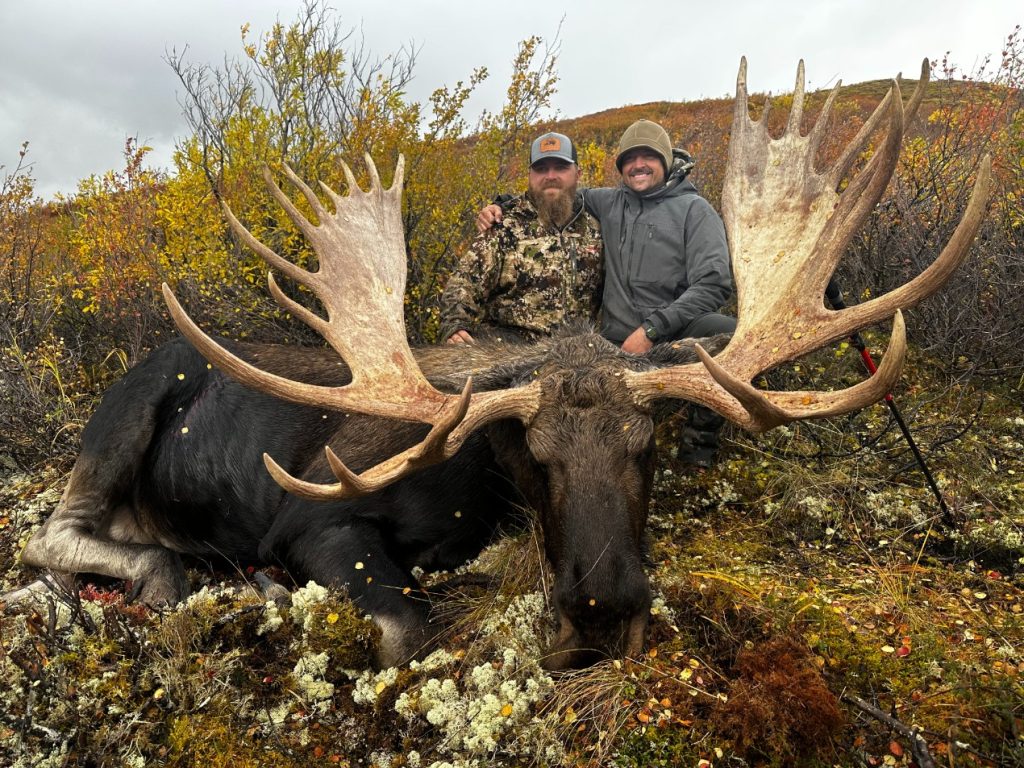
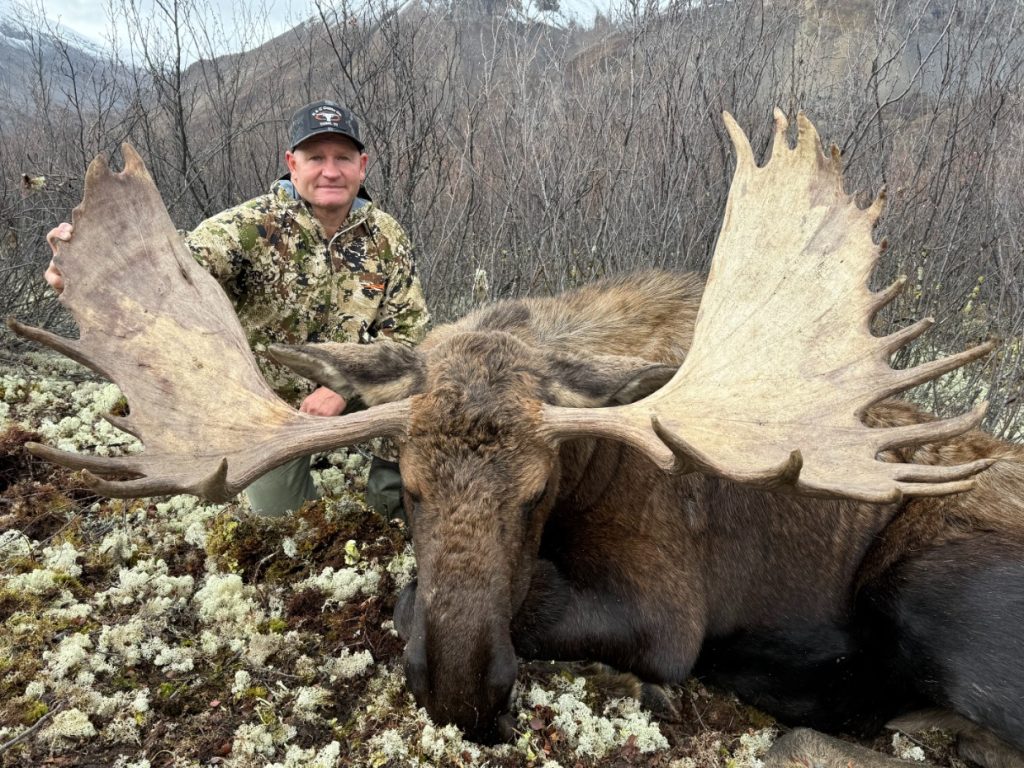
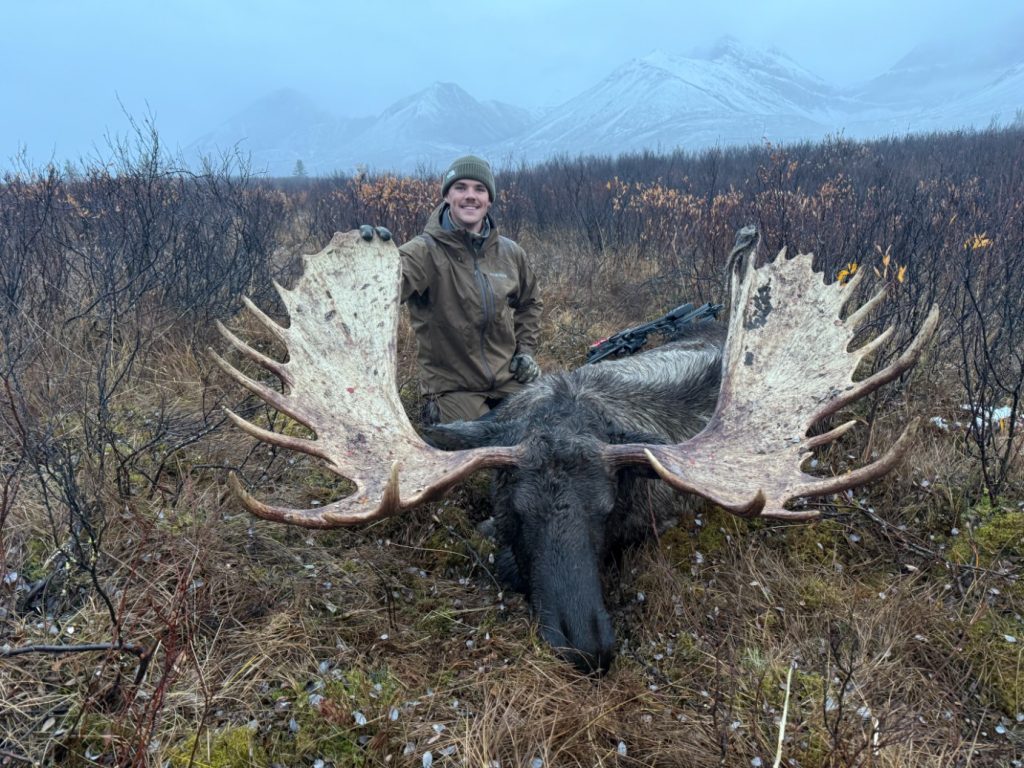
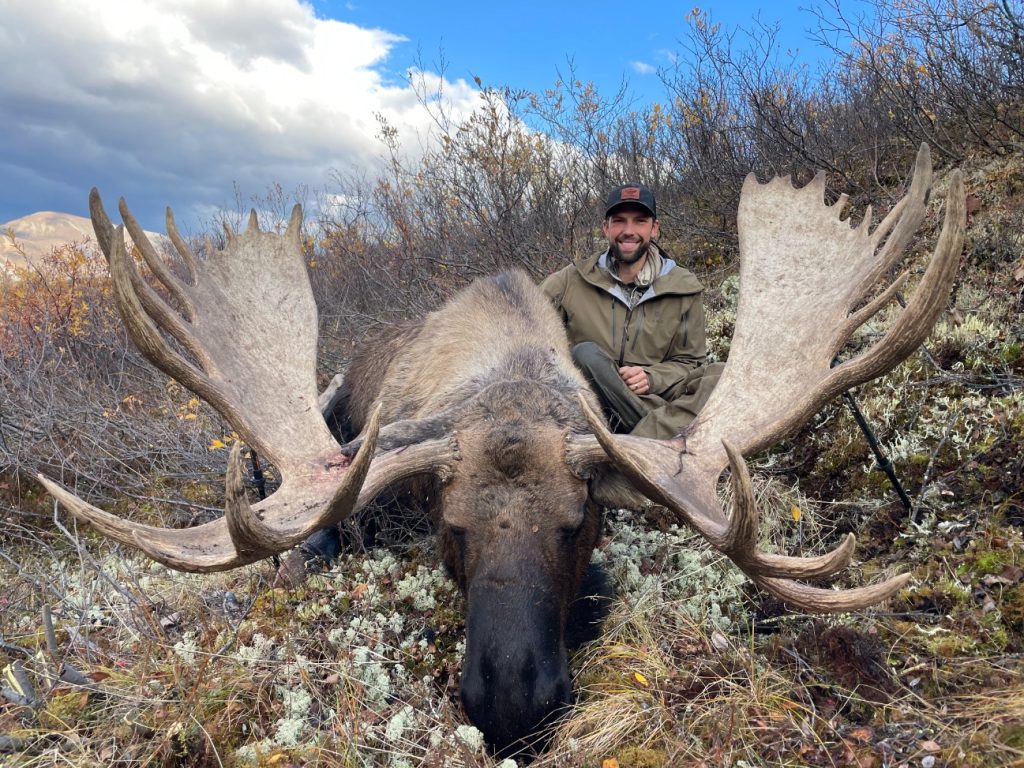
Alaska-Yukon Moose are known for their massive body size and antlers, and are sought after by hunting enthusiasts worldwide. Weighing in over 1600lbs on the hoof, and standing almost 7’ high at the shoulder, mature bulls will often sport antlers ranging in width from 55”-75”, making them a truly awe inspiring animal to see firsthand.
HUNT DATES
September 1-11
September 11-21
September 21 – October 1
Contact for availability and pricing.
Wolf and Wolverine are included.
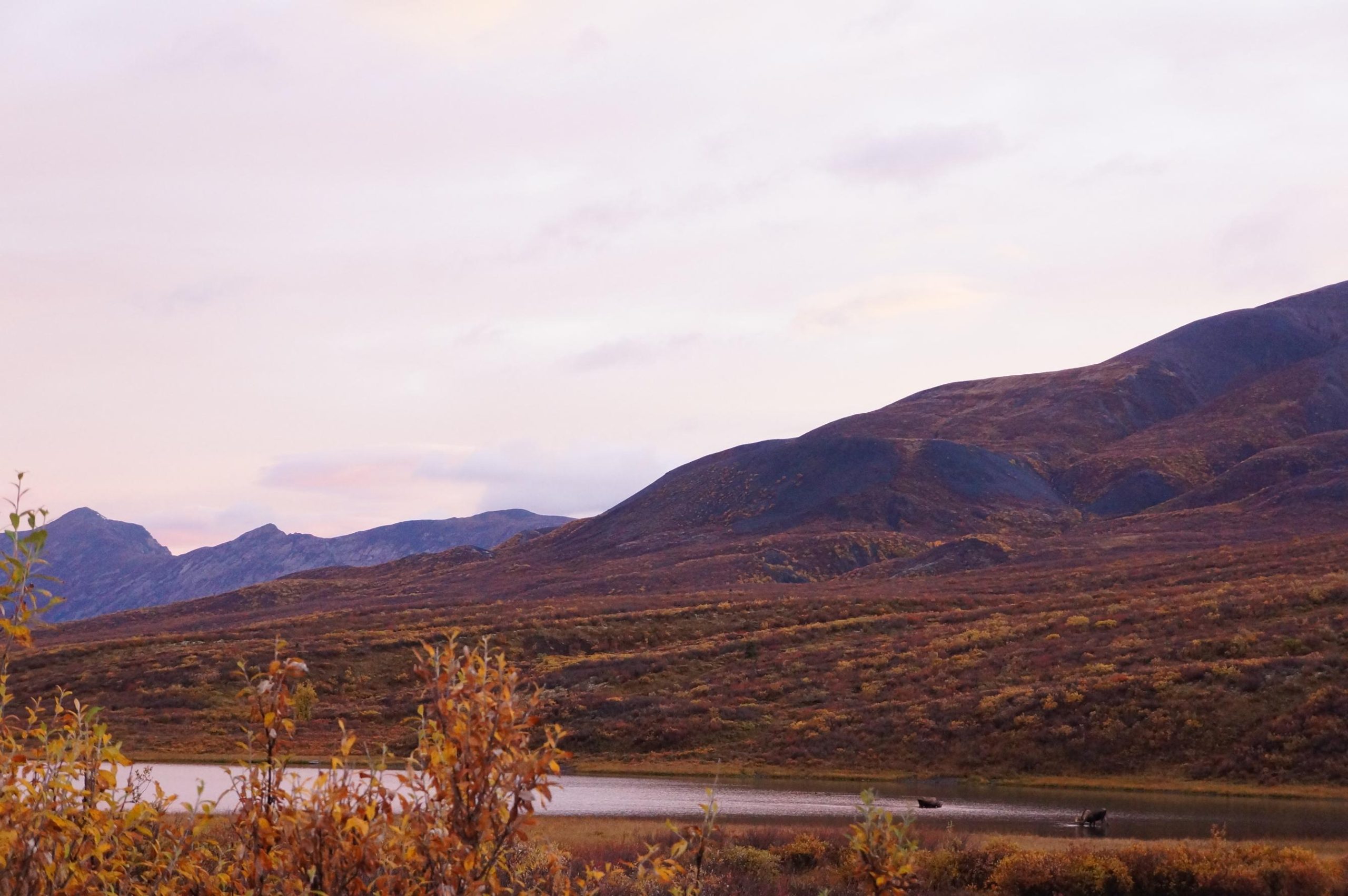
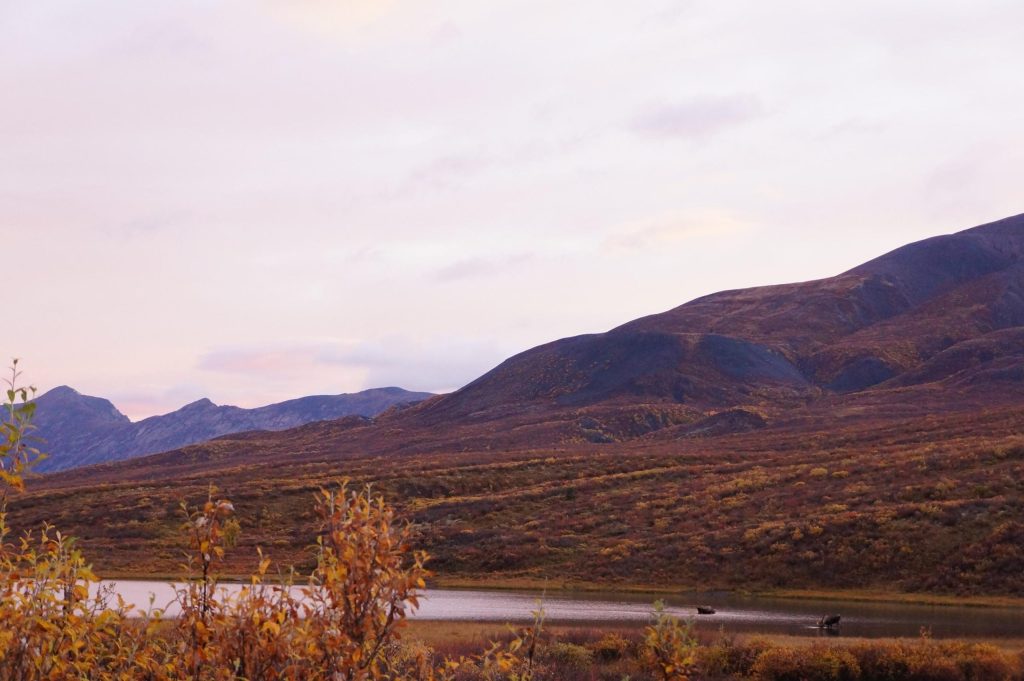
Moose can be found throughout our area from just above timberline to the valley and river bottoms. In the fall they roam the river valleys and some of the higher willow plateaus in search of cows to breed. The core of our best moose habitat takes in the drainages of the Bonnet Plume River, Stewart river, Nadaleen river, Rackla River and the Snake River. The southern half of the area receives more annual precipitation and contains the best habitat for moose hunting with extensive willow flats throughout. Moose feed extensively on alpine willow and also on aquatic plants in the muskeg swamps which are abundant in the concession. Our typical moose hunting terrain is mountainous, with wide, sparsely treed valleys, muskeg and small ponds littering the countryside. There is a lot of brush, arctic birch, several types of willow and small spruce trees for moose to hide in these areas.
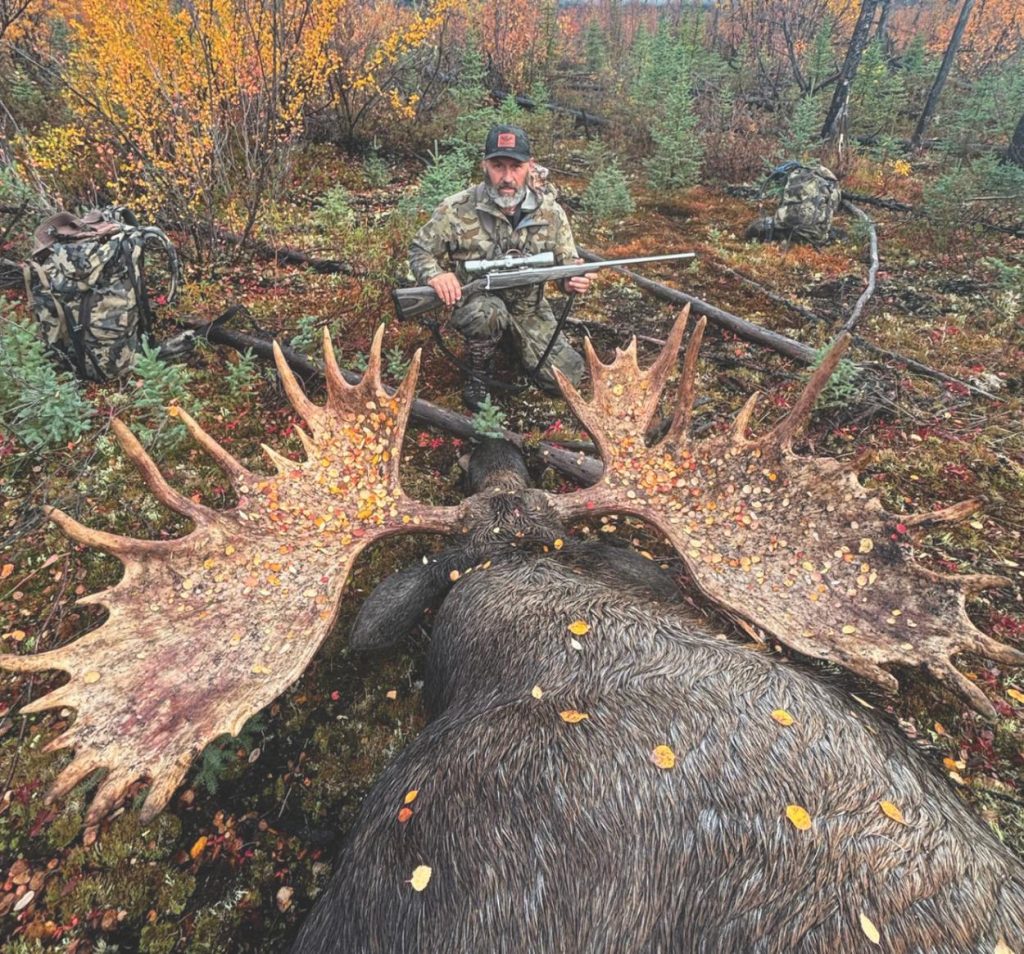
A large percentage of the moose population in our area has never been hunted as some areas are too difficult and remote to access by horse. Over the past 40 years, this was the case. With the new hunting techniques we will plan to employ, we should be able This On an average nine day moose hunt, hunters can expect to see about 20 moose, four or five of which might be considered trophy bulls. Our success rate on mature moose is over 90%. The average antler width of all bulls harvested is 59”to 60”, with some trophies measuring into the low 70” range. Regardless of antler width, most trophies taken by our hunters have excellent antler palmation and point development. The Boone and Crocket record book has more than a few listings for moose harvested in our area since 1986.
As our area is not far from the Arctic Circle, bulls clean their antlers of velvet in late August. On a normal fall bulls & cows can be seen together in early September. The rut is well under way by the middle of the month and bulls are very receptive to calling. Snow and cold weather can be expected any time in September, especially toward the end of the month. Hunters should expect that their guides will spend a full day or more taking proper care of the meat once a bull is down.
A moose-caribou combination hunt is very popular in our area. Both species can be found within riding distance of our September spike camps, although caribou begin to move out late in the month. The best method for hunting moose is hours of patient glassing from an elevated vantage point near suitable habitat. Even though moose are huge animals, they can be difficult to spot in thick willow and spruce cover.
Our Moose season is open August 1st, although we spend most of our time hunting in the high alpine for sheep and caribou at this time. Moose tags are still available and if a big bull is seen during this timeframe, a hunter may harvest him on a trophy fee basis.
Early September
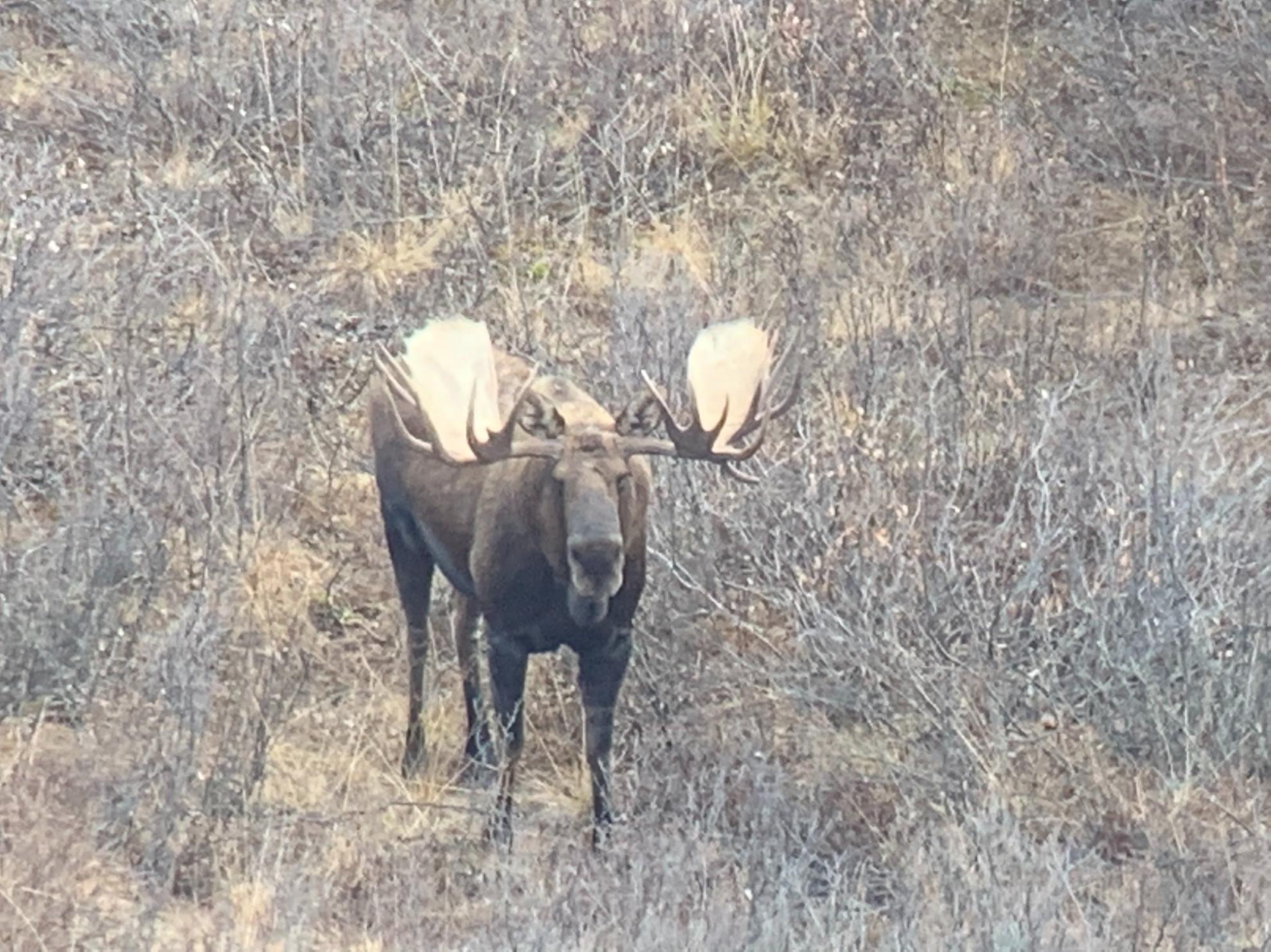
Generally, our moose specific hunts are from the end of August to the start of October, encompassing the cooler temperatures of the late season where moose are moving more heavily and easier to spot from glassing knobs up high. The start of September boasts the most beautiful fall foliage, and best temperatures for moose hunting, although the rut will not be in full swing quite yet. Hunters must be patient, as many hours will be spent glassing from vantage points to catch a glimpse of the freshly peeled antlers which are stark white when seen from miles away. These palms will glisten in the sun like beacons, and may just be the moose you are looking for.
Mid-September
Depending on the weather each year, mid-September is usually the start of the Moose rut in the North Country. This may vary slightly year to year depending on conditions, but a hunter can expect to witness rut activity on these hunts more often than not. If hit just right, mid-month can be very exciting and cow calling for moose a fun activity to partake in. We have witnessed big bulls come in to our cow calls from more than 2 miles away at times, although the norm would be within a 500m distance. Your guide may employ various techniques to get these big bulls worked up, including cow calling, grunting, and raking willows or trees, all very exciting in the moment when a big bull is coming in hot. Be ready for anything.
Late September
Although the weather is generally coldest on this hunt and leaves have all fallen to the ground, this can be the most exciting timeframe to come of all options available. Big bulls are usually always rutting at this time still, and are gathering their harems of cows and pushing them above timberline to protect them from satellite bulls intent on breeding. If a hunter can spot a cow moose at this time of the season, there is usually a bull somewhere close by. When two or more mature cows are seen together, this is usually a good sign that a bull has gathered them up and is right there close by. With leaves fallen to the ground, spotting these moose is easier also. Glassing and calling will be utilized during this timeframe, and year to year, our largest moose of the season are typically harvested on this date if hunters can brave the colder weather.
Horseback
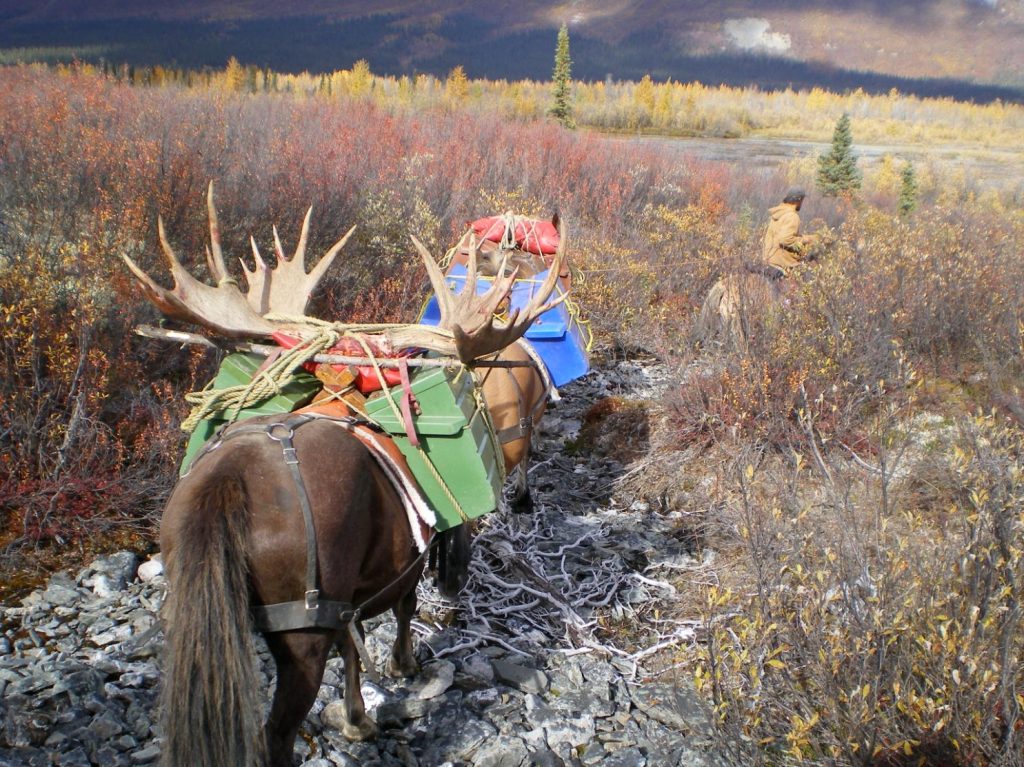
We have various options available depending on the hunt a person is looking for. Hunting by horseback is the classic option most desire. A hunter will have a guide and wrangler, along with a sturdy string of horses to get from point A to point B. The horses will be used daily to see new hunting areas, and get to glassing knobs within a few hours ride of spike camp. Once a moose is harvested, pack horses will thereafter transport your moose from the kill location to a nearby lake or airstrip for pickup with one of our bush planes, whether on floats or tundra tires. This option is great for all abilities and ages.
Backpack/ Fly In Lake Hunts
We are accessing new areas within our concession that have previously gone unhunted by utilizing backpack style hunts. Previously, only 40% of the entire 4000sq mile concession was hunted by horseback, as the area is just too big to hunt effectively with horsepower. If a hunter desires to backpack, they can expect to hit new country that has been hunted very little, or maybe never, in the past 40+ years. These hunts will be more physical and demanding, but the reward may be greater. Hunters can expect to either fly in to a wheel airstrip, or a lake and backpack from there. We try to stay within 2-3 miles of any given airstrip or lake as packing a full moose farther can be very challenging. Helicopters are not legal in the Yukon, so extraction needs to be with a wheel or floatplane from whatever location available nearby. Your experienced guide will do their best to make sure this is done within a reasonable distance for you. Hunting in this way allows us to hunt these new areas, which have seen so little pressure over the years and truly offer a world class hunting opportunity on huge moose simply dying of old age.
River Float Trips
Something never before done in the territory, we are beginning to utilize both ultralight Pack Rafts and inflatable jet boats to more effectively hunt the river systems within our area. Acting as major arteries, the Snake, Bonnet Plume, and Stewart Rivers allow us to hunt the northern, central, and southern portions of our area for moose, effectively spreading out our hunts to ensure a high age class on moose harvested. These areas have almost never been hunted as they were just too remote to access with horseback, so again, new country will be seen and the potential for world class moose is abundant in these regions. Hunters can expect to float slowly downriver, stopping often to glass new country and call. It is important to take your time and go slow, as these rivers flow fast and hunters can float right through prime moose country if rushing. Moose tend to stick close to water, so most bulls will be within a few miles of these river systems and huntable. Once an animal is harvested, it will be quartered up and bagged, and put in the raft to either float downriver to camp for pickup, or the jetboat will be utilized to get back upriver to a pickup location.

Other Hunts

California Bighorn Sheep

Dall Sheep

Alaska-Yukon Moose

Caribou

Mule Deer

Grizzly Bear

Black Bear

Cougar

Wolf